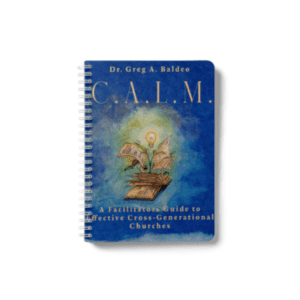
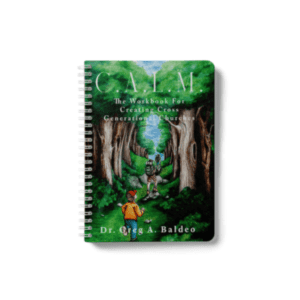
How to build a church every generation calls home, using The Cross Generational CALM Church System.
This gives you access to the full church system and everything you need to transform your church.
generations now share the same church for the first time in history
drop in U.S. adults identifying as Christian since 2007 (Pew)
of church-raised teens drop out between ages 18 and 22 (Lifeway)
of young adults who stayed did so to follow the example of an adult who invested in them (Lifeway)
For the first time in history, six generations share the same sanctuary, and yet the pews are emptying from both ends. When the music gets too loud, the older members slip away, and when it stays too dated, the young families visit once and never come back. The young are leaving. The older are leaving. And the generations who remain are not working together.
Seminary prepared our pastors to preach, to teach, and to shepherd, and the church manuals cover doctrine and governance well. But nobody ever handed our leaders the tools to have the conversation between six profoundly different worldviews sitting in one sanctuary, so the generations avoid each other and the pews keep emptying.
Now, there is no shortage of theories about why. Some blame the culture, some blame the phones, some blame the pandemic, and plenty blame each other. What sets this system apart is that it was tested for over ten years in real congregations, and this page shares what that testing found.
“They haven’t lost their faith. They’ve lost their connection.” Dr. Greg Baldeo, The CALM Effect
A clear path from diagnosis to a church where every generation is needed.
Why churches decline when generational differences are mishandled, and how to recognize the five warning signs in your own congregation.
The single reframe that turns generational tension into your church’s greatest untapped asset.
Conversation, Awareness, Love, and Mutual Respect. CALM brings your church into a cross-generational culture, built from a decade of study and refined in real congregations.
The step-by-step, user-friendly system that carries a church from assessment to a lasting cross-generational culture, with ready-made videos and guides for pastors and facilitators.
The two words sound interchangeable, and most churches use them that way, but they are not the same. A multigenerational church has the generations attending together. An intergenerational church has them integrated, side by side in the same rooms and the same programs. A cross-generational church goes further, because there the generations cross-pollinate together.
An intergenerational church has the generations in the room. They worship in the same services, serve in the same programs, and greet each other in the same lobby. This is genuinely good, and many churches have worked hard to get here. But being in the same room does not mean anything is passing between the generations.
A cross-generational church advances that presence into exchange. The generations invest in each other deliberately, in both directions, so that every member is both a teacher and a learner. The room is the same, but now something is moving across it.
“Presence is a start. Cross-pollination is the goal.”
Developed by Dr. Greg Baldeo and tested over ten years in real congregations.
Communication informs. Conversation transforms.
Without awareness, we react. With awareness, we respond.
Tolerance avoids.
Love invests.
Respect can never be demanded. It must be modeled.
“Conversation opens the door. Awareness changes the posture. Love shapes the action. Mutual respect sustains the work.”
Research consistently points to relationships across generations as the strongest lever for retention and growth. Fuller Youth Institute’s Growing Young study of 259 congregations across 21 denominations found that churches that intentionally engage young people experience vitality that spreads through the entire congregation.
Lifeway found that 43% of young adults who stayed in church did so to follow the example of a parent or another adult who invested in them, and that disconnection from people, rather than loss of belief, drives most departures. People lose connection long before they lose faith. CALM cultivates the conditions where that connection, and the unity that follows, can grow.
“Being needed is stronger than being welcomed.”
Sources: Pew Research Center, 2023–24 Religious Landscape Study • Lifeway Research, Young Adult Church Dropout Study • Fuller Youth Institute, Growing Young
Cross-pollination is the heart of the idea. In a garden, pollen has to travel between plants for anything to grow, and in a church, wisdom has to travel between generations for the body to flourish. That travel runs in two directions at once.
Technology, cultural fluency, and what is current. The younger generations help the church speak to the world as it is today.
Foundation, perspective, and a tested faith. The seasoned generations give the young something solid to stand on.
When both directions are working, no generation is merely accommodated. Each one is needed, and being needed is stronger than being welcomed. That is what Paul describes in one body with many members, every part doing its work, and it is why a cross-generational church retains people that an intergenerational church loses.
Most leaders recognize at least three of these in their own congregation. None of them come from malice. In nearly every case, the generations were simply never shown how to have the conversation.
The Cross-Generational Church Assessment gives you an honest picture of where your congregation stands, and it is the first step every church takes into the CALM system.
Take the Church AssessmentNaming the divide is one thing, but closing it is another, and this is where most churches get stuck. The research shows that CALM solves this. Built on scientific research and over ten years of testing in real congregations, CALM gives your church a clear path from awareness to practice through four commitments the whole body learns together: Conversation, Awareness, Love, and Mutual Respect.
Here is how it works. We train your church to have the conversations the generations have been avoiding, so that people on every side finally feel heard. We build awareness of how each generation was shaped and why they see the church differently, because you cannot change what you refuse to see. We move members past tolerance into love that invests across the age spectrum. And we establish mutual respect as the habit that sustains all of it, modeled first by the leaders.
None of this is left to chance. It starts with the Church Assessment, where we walk your church through discovery, diagnosis, and determination, so you know exactly where your congregation stands and what to do about it. From there, we train your local facilitators through our webinars. These are your own people, leaders who know their church, equipped by us to lead the work. Those trained facilitators then run the CALM Workshops right in your local church, and we provide every material they will ever need, from the PowerPoints and books to the videos, guides, and materials to share. Then comes implementation, where your church carries cross-generational practice into every program and every service it offers.
CALM brings unity across the generations and builds healthy congregations. And a key thing to understand: we are not advocating for the younger generation or the older generation. We advocate for all the generations, because every generation is a gift to the church, and every gift must be opened and used.
Explore the CALM Church System™
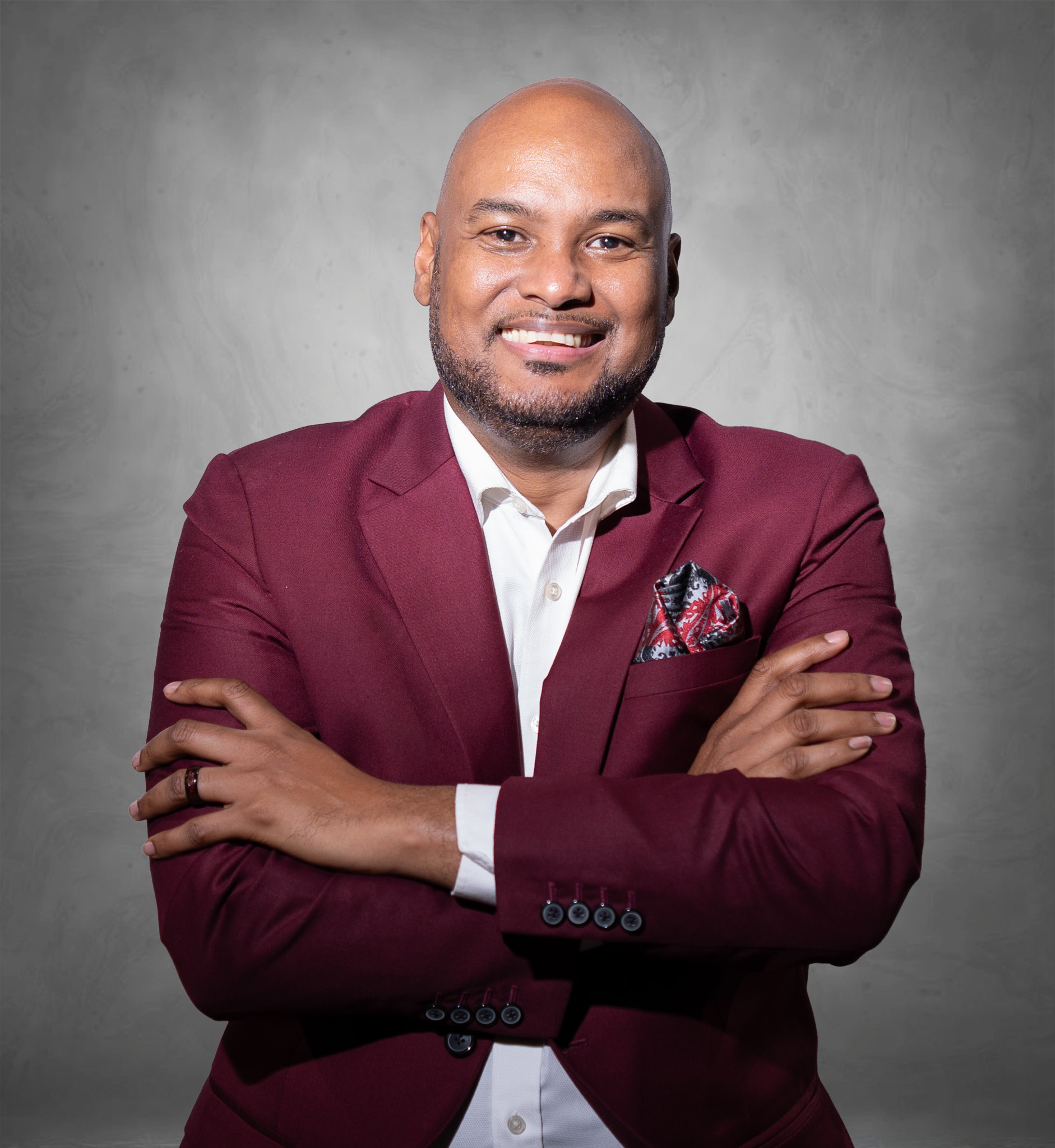
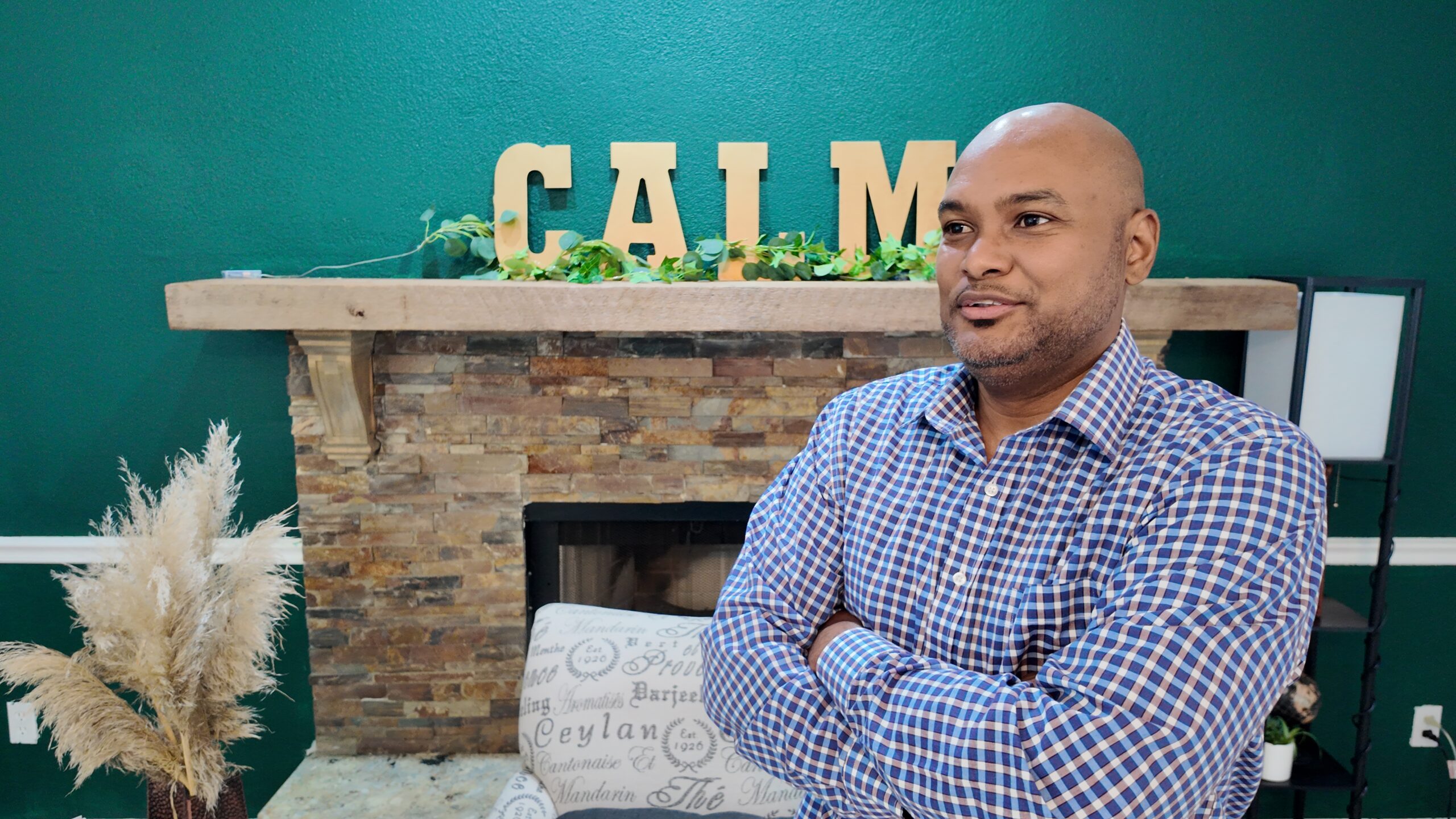
Dr. Greg Baldeo is an ordained pastor with more than twenty years of ministry leadership, an educator, a leadership strategist, and a change management professional. His research on closing the generational divide became the book The CALM Effect and the church system that carries its name.
He is the author of over seven books, systems, and frameworks, and three of those books, including The CALM Effect, speak directly to cross-generational ministry.
If your church has six generations and one sanctuary, this belongs on your calendar.
Three ways to continue, depending on where your church is today.